Top-rated independent appliance repair across Colorado
Refrigerator Repair — Book a Visit Today
We repair refrigerators of all major brands as an independent shop, so call us and tell us what your fridge is doing. Denver's dry air puts them through some odd wear. Door gaskets dry out and crack. Condenser coils pack with dust and pet hair, and then the compressor runs hot at altitude, where the cooling air is thinner. Defrost heaters quit, ice creeps over the evaporator, and airflow stops. Ice makers freeze into one solid block. A visit starts with temperatures in both compartments. Then we listen to the compressor and fans, check the seals, pull the coils, and test the defrost circuit. We tell you what we found in plain words before any part comes out.
Call (888) 352-5066- Real people on the phone
- 7 days a week
- Quote in writing before any work
Taking calls until 5:00 PM MT
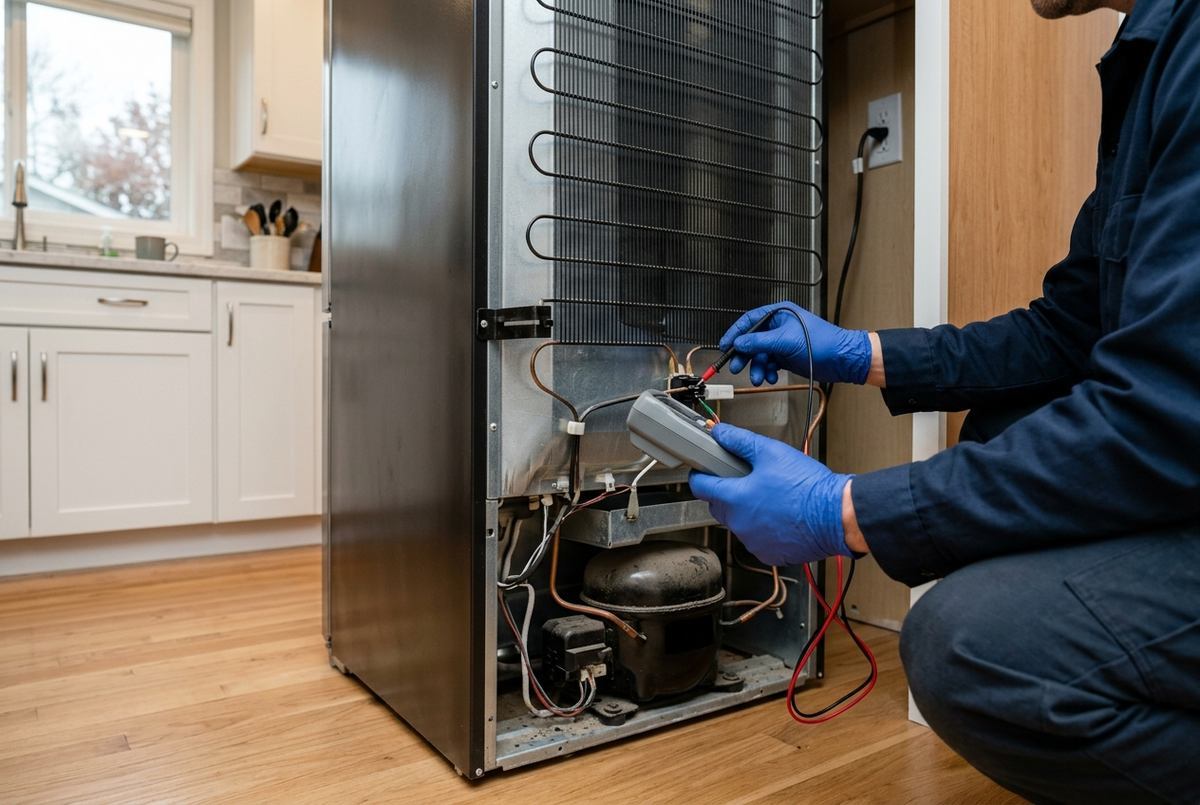
The refrigerator symptoms we hear most
- Fridge is warm but the freezer is freezing Blocked evaporator airflow, a failed defrost heater, or a stalled circulation fan
- Water pooling under the crisper drawers Clogged or frozen defrost drain line
- It runs all day and never shuts off Dirty condenser coils, a weak door seal, or a stuck thermostat
- Ice maker makes one giant chunk Leaking fill valve, bad mold thermostat, or a warm freezer compartment
- Loud buzzing or rattle from the back Failing condenser fan motor, compressor mount, or start relay
Safe things to check first
Worth a look before you call — sometimes it saves you the visit.
- 1Check the plug and the breaker, then make sure the outlet isn't on a switched or GFCI circuit that tripped.
- 2Close the door on a sheet of paper and tug. If it slides right out, the gasket is losing grip.
- 3Look behind or under the unit for coils packed with dust, hair, or lint.
- 4Make sure the vents inside both compartments aren't buried behind food or frost.
Why homeowners pick a local independent shop
| V-Hood Denver | Big-box repair chains | Handyman listings | |
|---|---|---|---|
| Written quote before any work | ✓ | ✕ | ✕ |
| Phones answered by people, every day | ✓ | ✕ | ✓ |
| Gas and electric, all major brands | ✓ | ✓ | ✕ |
| Independent shop, nobody's quota | ✓ | ✕ | ✓ |
| Local techs who know the housing stock | ✓ | ✕ | ✓ |
After the visit, in their words
“Fridge died the week groceries were stocked for a birthday. They squeezed us in same day.”
Cliff T.Burlington, CO“Zero pressure at any point. The quote sat in my inbox for two days while I decided, no chasing calls.”
Rita M.Genesee, CO“He leveled the machine, replaced the pump, and ran a full cycle before leaving. Thorough.”
Dean S.Lincoln Park, CORefrigerator Repair — quick answers
Why does my fridge struggle more in Colorado?
Thin, dry mountain air carries less heat away from the condenser, so the compressor runs longer. Dry indoor air also stiffens rubber door gaskets. Both of those push a marginal fridge over the edge sooner than it would fail at sea level.
How cold should the compartments be?
Most homes do fine with the fresh food side near 37 degrees and the freezer near 0. Put a separate thermometer in a glass of water overnight. Big swings between readings usually point to airflow or defrost trouble instead of the dial setting.
Should I empty the fridge before you come?
No need to empty it. Clear a path to the front and pull items away from the back wall vents so we can see frost patterns. If a repair is going to take several hours, we'll say so before we start pulling food out.
Is a leaking refrigerator serious?
Water on the floor usually means a plugged defrost drain or a cracked water line, and both keep dripping. Left alone it warps flooring and grows mildew. Wipe it up, note where it starts, and get it looked at.
Can you fix a fridge that's still cold but noisy?
Often, yes. Noise usually comes from a fan motor, a start relay, or loose compressor mounting. Catching it early beats waiting for the cooling to quit, since a failing fan makes the compressor overheat.
Do you work on built-in and counter-depth units?
We service standard, counter-depth, side-by-side, French door, and many built-in models across major brands. Built-ins take more care to pull and reseat. Tell us the brand and model when you call us so we bring the right parts.
How it works
- Step 1
Tell us the symptom
Call or fill out the form and describe the noise, the smell, or the error code. Tell us your altitude and whether the unit vents outside. Those small details decide which parts ride along on the van.
- Step 2
We diagnose on site
A technician looks at the appliance right there in your kitchen or laundry room. We test airflow, heat, drainage, and the electrical side. Then we explain the fault in plain words and lay out your repair options before a wrench comes out.
- Step 3
Repair and airflow check
Once you approve it, we do the work. Before we pack up, we run the appliance and confirm it vents, drains, and cycles the way it should. We clean up the area, then tell you what to keep an eye on next season.
- A real person answers
- Open 7 days
- Written quote before work starts
Why homeowners call us
- Rooted in kitchen ventilationHoods, ducts, and blower motors are where this shop started, and the habit stuck. We look at how air moves through your dryer vent, your fridge coils, your dishwasher drain. Blocked airflow causes more breakdowns than bad parts do.
- Built for thin, dry airColorado altitude changes how burners fire and how moisture leaves a room. Dry air also cracks gaskets and dries seals out early. We account for both when we diagnose, instead of treating your home like it sits at sea level.
- Independent and directWe are an independent repair company and we work on all major brands. No script, no upsell theater. If a repair does not make sense for the age of the machine, we say so out loud and let you decide.
- Clear talk, clean workYou get the fault explained in words you can repeat to your spouse. Drop cloths go down, we respect your floors, and dust from vent work gets vacuumed up before we leave the kitchen.
- All major brands, gas & electricIndependent service on Whirlpool, LG, Samsung, GE, Maytag, Bosch, KitchenAid and the rest.
- Straight answersNot worth fixing? We say that out loud, and often it saves you the visit fee.
Refrigerator Repair
Small faults become big ones on a schedule of their own
Describe the symptoms and we'll book the visit — takes about a minute.
- A real person answers
- Open 7 days
- Written quotes
- All major brands
- Gas & electric
Rather not call? Get a free quote →