Top-rated independent appliance repair across Colorado
Freezer Repair — Book a Visit Today
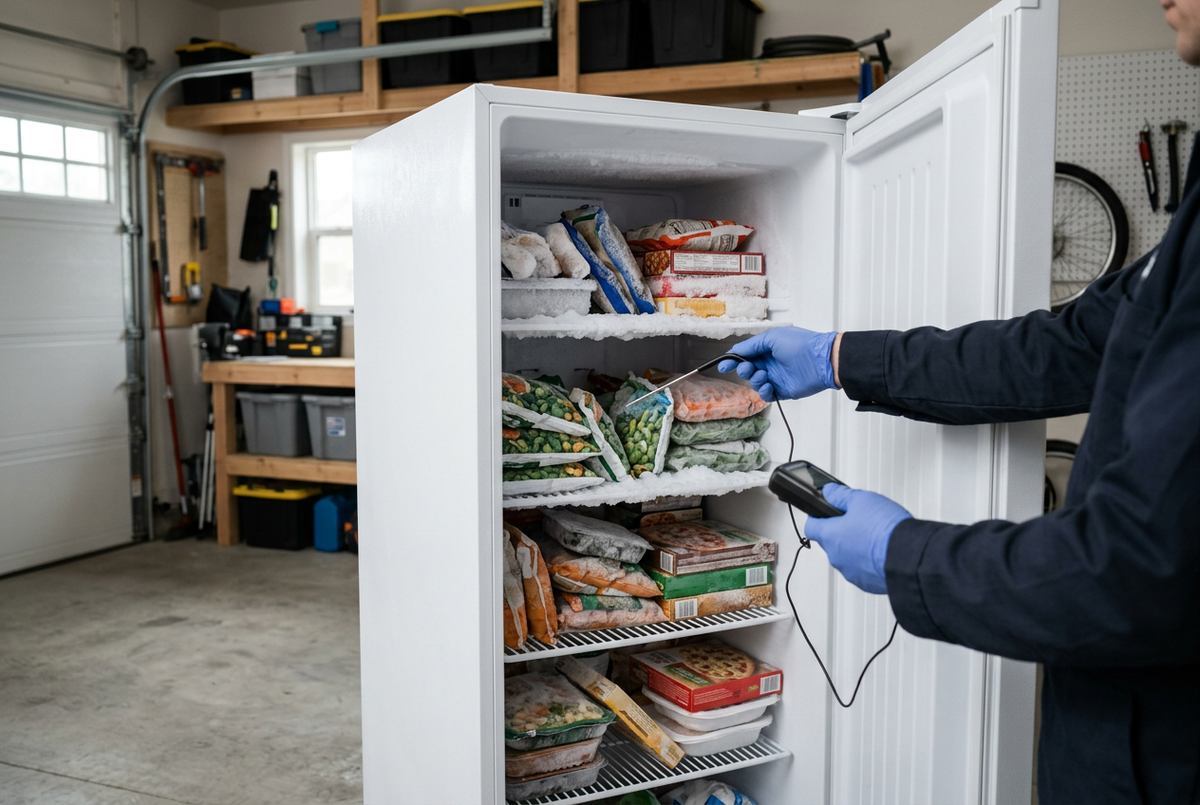
We repair freezers across Colorado, chest, upright, and built-in, as an independent shop, so call us if yours is frosting up or thawing out. Freezers fail quietly. You notice frost creeping up the walls, or ice cream that scoops like soup. Most of it comes down to airflow: a blocked evaporator, a frosted coil, a fan motor that quit spinning, or a door gasket that dried out in Colorado's thin, dry air. Sometimes it's a defrost heater or thermostat. Sometimes the compressor is short-cycling. A visit starts with temperature readings and a look at where the cold air is supposed to move. We check the seal, the coils, the fans and the controls, then explain what we found in plain words before any part goes in.
Call (888) 352-5066- Real people on the phone
- 7 days a week
- Quote in writing before any work
Taking calls until 5:00 PM MT
The freezer symptoms we hear most
- "There's a wall of frost inside" Defrost system failure (heater, timer, or bimetal thermostat), or a door gasket letting humid air in.
- "Everything's soft but the light works" Sealed system or compressor trouble, or a stuck evaporator fan that isn't moving cold air.
- "It runs constantly and never shuts off" Thermostat or control board misreading temperature, dirty condenser coils, or a leaking door seal.
- "Water is pooling under the freezer" Clogged defrost drain line, or a frozen drain trough backing melt water into the cabinet.
- "It's making a loud buzzing rattle" Failing evaporator or condenser fan motor, or a start relay struggling at the compressor.
Safe things to check first
Worth a look before you call — sometimes it saves you the visit.
- 1Make sure the door closes fully and nothing inside is holding it open a hair.
- 2Slide a dollar bill into the door seal and see whether it slips out with no drag.
- 3Pull the unit out and look at the condenser coils for dust, pet hair, or lint buildup.
- 4Confirm the outlet has power by plugging in a lamp, and check the breaker before assuming the worst.
Why homeowners pick a local independent shop
| V-Hood Denver | Big-box repair chains | Handyman listings | |
|---|---|---|---|
| Written quote before any work | ✓ | ✕ | ✕ |
| Phones answered by people, every day | ✓ | ✕ | ✓ |
| Gas and electric, all major brands | ✓ | ✓ | ✕ |
| Independent shop, nobody's quota | ✓ | ✕ | ✓ |
| Local techs who know the housing stock | ✓ | ✕ | ✓ |
After the visit, in their words
“Wall oven is fifteen years old and they still sourced the part in three days.”
Vera K.Burlington, CO“The tech talked me OUT of a repair that would not have lasted. You do not forget that kind of honesty.”
Art B.Genesee, CO“Washer error code meant nothing to me. He knew it on sight and had it cleared in under an hour.”
June C.Lincoln Park, COFreezer Repair — quick answers
What temperature should my freezer hold?
Around 0\u00b0F is the target for safe long-term storage. If your thermometer reads 10\u00b0F or warmer, food quality drops fast. Give the unit a few hours after any door-open stretch, then read it again before calling.
Why does frost build up so fast in Denver?
Dry indoor air still carries moisture, and every door opening pulls some in. When a gasket has hardened or the defrost cycle quits, that moisture freezes on the evaporator instead of draining away. Then the frost chokes the airflow.
Can you repair a garage or basement freezer?
Usually, yes. Unheated Colorado spaces swing hard between hot and cold, and some units struggle when ambient temperatures drop. We check whether the model is rated for that space, and whether the control is reading the room instead of the box.
How long can food stay frozen during a repair?
A full, closed freezer holds cold for roughly a day or two. Keep the door shut, group items together, and cover the load with towels or blankets. If the repair will stretch longer, move the most valuable items to a cooler.
Is a loud noise something I can ignore?
Not for long. Buzzing or grinding often means a fan motor bearing or a compressor start component is on its way out. Running a unit in that state can turn a small part swap into a sealed-system problem. Describe the sound when you call us.
Do you work on built-in and standalone models?
Both. Chest freezers, upright standalones, drawer units and column built-ins all come across our bench. We service all major brands as an independent company, so we're not limited to one manufacturer's lineup.
How it works
- Step 1
Tell us the symptom
Call or fill out the form and describe the noise, the smell, or the error code. Tell us your altitude and whether the unit vents outside. Those small details decide which parts ride along on the van.
- Step 2
We diagnose on site
A technician looks at the appliance right there in your kitchen or laundry room. We test airflow, heat, drainage, and the electrical side. Then we explain the fault in plain words and lay out your repair options before a wrench comes out.
- Step 3
Repair and airflow check
Once you approve it, we do the work. Before we pack up, we run the appliance and confirm it vents, drains, and cycles the way it should. We clean up the area, then tell you what to keep an eye on next season.
- A real person answers
- Open 7 days
- Written quote before work starts
Why homeowners call us
- Rooted in kitchen ventilationHoods, ducts, and blower motors are where this shop started, and the habit stuck. We look at how air moves through your dryer vent, your fridge coils, your dishwasher drain. Blocked airflow causes more breakdowns than bad parts do.
- Built for thin, dry airColorado altitude changes how burners fire and how moisture leaves a room. Dry air also cracks gaskets and dries seals out early. We account for both when we diagnose, instead of treating your home like it sits at sea level.
- Independent and directWe are an independent repair company and we work on all major brands. No script, no upsell theater. If a repair does not make sense for the age of the machine, we say so out loud and let you decide.
- Clear talk, clean workYou get the fault explained in words you can repeat to your spouse. Drop cloths go down, we respect your floors, and dust from vent work gets vacuumed up before we leave the kitchen.
- All major brands, gas & electricIndependent service on Whirlpool, LG, Samsung, GE, Maytag, Bosch, KitchenAid and the rest.
- Straight answersNot worth fixing? We say that out loud, and often it saves you the visit fee.
Freezer Repair
Small faults become big ones on a schedule of their own
Describe the symptoms and we'll book the visit — takes about a minute.
- A real person answers
- Open 7 days
- Written quotes
- All major brands
- Gas & electric
Rather not call? Get a free quote →