Top-rated independent appliance repair across Colorado
A Refrigerator That Won't Cool
Milk tastes off. The butter is soft. You open the fridge and it feels like a cool closet instead of a cold box. Meanwhile the freezer may still be rock solid, which makes the whole thing confusing. A refrigerator that stops cooling is usually telling you something specific about airflow. Here is how we read those clues before anyone touches a tool.
Call (888) 352-5066- Real people on the phone
- 7 days a week
- Quote in writing before any work
Taking calls until 5:00 PM MT
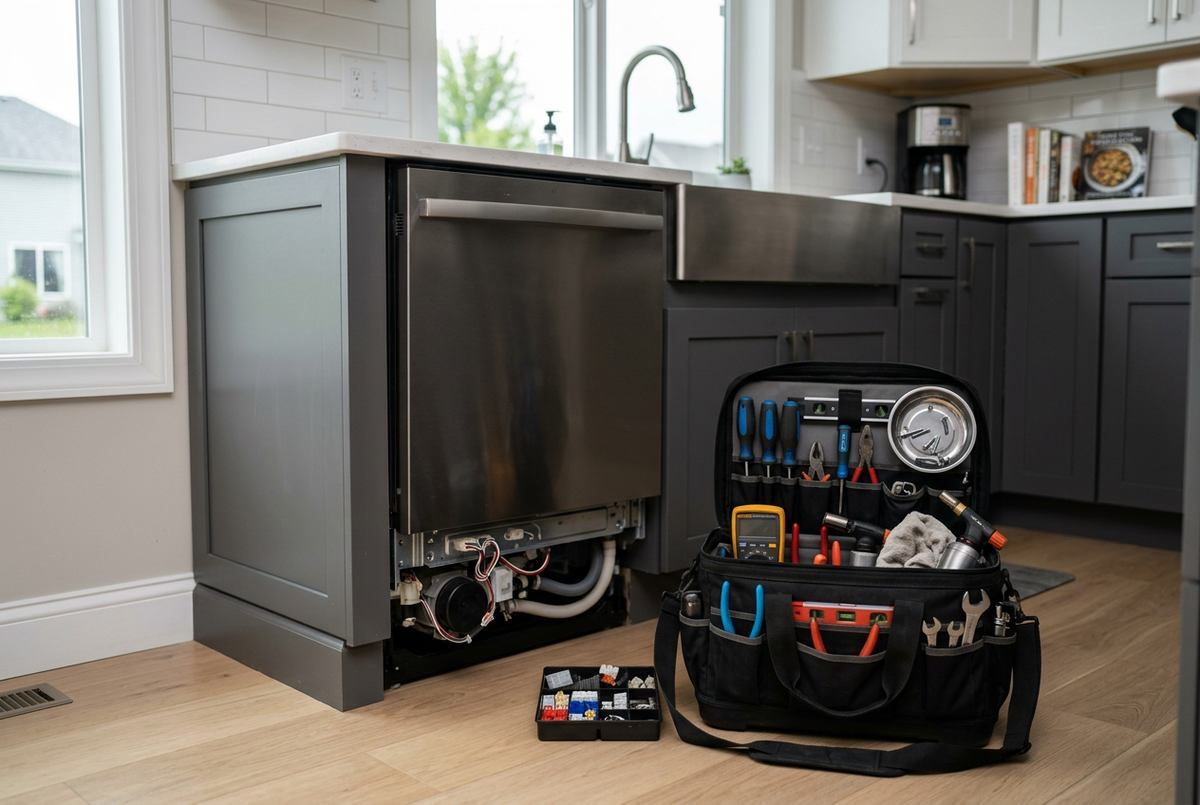
From the technicians at V-Hood Denver
What "not cooling" actually means
A refrigerator does not make cold. It moves heat out and moves cold air around. So when the fridge section warms up, the question is almost always where the air stopped moving. Cold air is made in one place, usually behind the freezer wall, then pushed into the fresh food side through a vent. Block that path, and the freezer stays fine while the fridge climbs. If both sections are warm, the problem sits earlier in the chain, at the cooling system itself. Note which section is warm and for how long. That one detail narrows the list fast, and it saves time when you call us.
Cause family one: airflow and frost
Start here because it is the most common and the least expensive. Overpacked shelves against the rear vent stop cold air cold. A door that gets bumped ajar dumps humid room air inside. Along the Front Range our air is dry, but a leaky door gasket still pulls in enough moisture to build frost on the evaporator coil, and frost blocks the fan. You may hear a faint scraping or a fan that runs loud then quiets. Ice buildup on the freezer's back wall is a strong sign. Frost problems point at a defrost part, a door seal, or a fan, not a dead compressor.
Cause family two: dirty condenser and heat that can't escape
Underneath or behind the fridge sits a coil that dumps heat into your kitchen. Dust, pet hair, and Denver's fine dry grit pack it solid. Once that coil is blanketed, the system runs and runs but never pulls the box down. Signs: the sides feel hot, the unit almost never shuts off, and the freezer is soft rather than solid. Tight cabinet openings make it worse because the heat has nowhere to go. High altitude does not change the physics much, but a fridge crammed into a sealed nook in a finished basement gets no help. Vacuuming reachable dust is fine. Leave the coil covers alone.
Cause family three: controls, sensors, and the sealed system
If air moves and the coil is clean, we look at the brain and then the guts. Thermistors tell the board how cold it is. A drifting sensor makes the fridge quit cooling long before the food is safe. Control boards fail quietly with no noise at all. Deeper still is the sealed system: compressor, refrigerant, and the lines. That work needs recovery equipment and licensing, and it is never a DIY job. The tell is a fridge that is dead silent and room temperature, or one that hums but never gets cold anywhere. This family is diagnosis first, always.
Safe checks, then what we do differently
Safe for you: confirm the outlet has power, check the temperature dials were not knocked, pull food off the rear vent, close the door on a dollar bill and see if it slides out easily, and look for ice on the freezer's back wall. Give a plugged-in fridge a full day before judging it. What we add is measurement. We read actual air and coil temperatures, test sensor resistance against spec, watch the defrost cycle run, and check current draw. That tells us whether a fan, a gasket, a board, or the sealed system is at fault. Call us with your notes ready.
A Refrigerator That Won't Cool — what people ask
Why is my freezer still cold but the fridge is warm?
That split almost always means airflow. Cold is being made, but it is not reaching the fresh food side. Common reasons are frost over the evaporator, a stalled circulating fan, or a damper stuck closed.
Should I unplug it and let it thaw?
Unplugging for several hours can melt frost and restore cooling for a while. Put towels down first. If it warms again in days, the defrost system is the real issue and needs a proper look.
How long should I wait before calling?
If the fridge is above roughly 40 degrees for more than a few hours, move perishables to a cooler and call. Waiting only costs you groceries. Note which section is warm before you phone us.
How it works
- Step 1
Tell us the symptom
Call or fill out the form and describe the noise, the smell, or the error code. Tell us your altitude and whether the unit vents outside. Those small details decide which parts ride along on the van.
- Step 2
We diagnose on site
A technician looks at the appliance right there in your kitchen or laundry room. We test airflow, heat, drainage, and the electrical side. Then we explain the fault in plain words and lay out your repair options before a wrench comes out.
- Step 3
Repair and airflow check
Once you approve it, we do the work. Before we pack up, we run the appliance and confirm it vents, drains, and cycles the way it should. We clean up the area, then tell you what to keep an eye on next season.
- A real person answers
- Open 7 days
- Written quote before work starts
Why homeowners call us
- Rooted in kitchen ventilationHoods, ducts, and blower motors are where this shop started, and the habit stuck. We look at how air moves through your dryer vent, your fridge coils, your dishwasher drain. Blocked airflow causes more breakdowns than bad parts do.
- Built for thin, dry airColorado altitude changes how burners fire and how moisture leaves a room. Dry air also cracks gaskets and dries seals out early. We account for both when we diagnose, instead of treating your home like it sits at sea level.
- Independent and directWe are an independent repair company and we work on all major brands. No script, no upsell theater. If a repair does not make sense for the age of the machine, we say so out loud and let you decide.
- Clear talk, clean workYou get the fault explained in words you can repeat to your spouse. Drop cloths go down, we respect your floors, and dust from vent work gets vacuumed up before we leave the kitchen.
- All major brands, gas & electricIndependent service on Whirlpool, LG, Samsung, GE, Maytag, Bosch, KitchenAid and the rest.
- Straight answersNot worth fixing? We say that out loud, and often it saves you the visit fee.
About this guide
Past the safe checks, it's a job for tools and a meter
Bring your notes from the checks to the call and booking takes no time.
- A real person answers
- Open 7 days
- Written quotes
- All major brands
- Gas & electric
Rather not call? Get a free quote →