Top-rated independent appliance repair across Colorado
How the Seasons Wear on Home Appliances
Colorado's seasons hit appliances in predictable ways, and most of the early symptoms you can check yourself before calling anyone. Your dryer worked fine in July, and now it's January and towels come out damp. Or the fridge hums all night in August and the ice tastes stale. Dry air, thin air, hard temperature drops, and dust each push machines in a different direction. Here's what tends to break in which season, and what's safe to look at on your own.
Call (888) 352-5066- Real people on the phone
- 7 days a week
- Quote in writing before any work
Taking calls until 5:00 PM MT
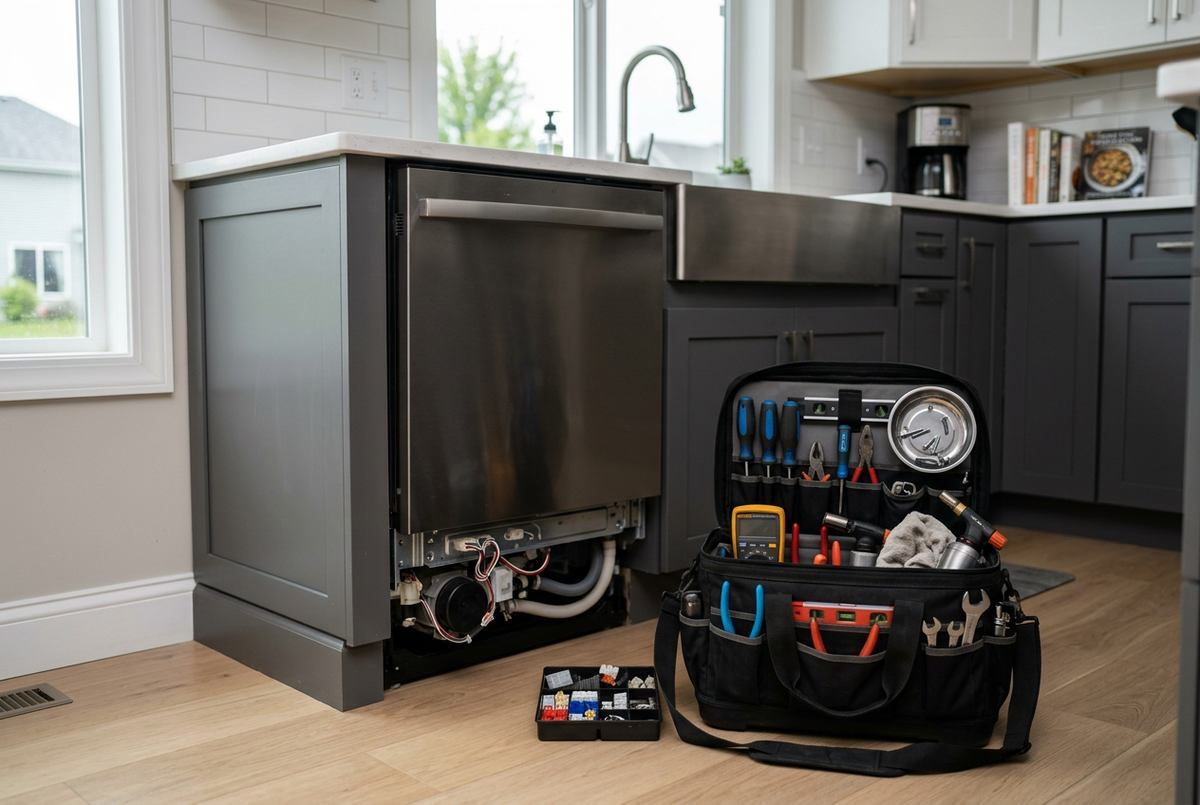
From the technicians at V-Hood Denver
Winter: dry air, cold garages, and struggling dryers
Cold, dry Colorado air makes static jump and rubber go stiff. Door gaskets on refrigerators and washers get brittle and quit sealing. If your garage fridge or freezer sits below freezing, the compressor may barely cycle at all, and then the freezer section warms up. That's a unit working outside its design range, not always a fault. Dryers slow down in winter too, because cold air along a long vent run lets moisture condense inside the duct. Look for frost at the outside vent hood. Wipe the gaskets with warm water, then close the door and give it a firm tug to feel for a gap. Clear snow away from any outside vent flap.
Spring: dust, pollen, and the first big cooling demand
When the wind starts and the cottonwood lets go, anything with a fan pulls in debris. Refrigerator condenser coils load up with lint and pet hair, the compressor runs longer, and the fresh food side drifts warm. Range hood filters clog, and then the kitchen starts holding cooking smells. Dishwasher screens catch grit tracked in from muddy yards. Spring is the time to vacuum the coil area at the base or back of the fridge with a brush attachment, wash metal hood filters in hot soapy water, and pull the dishwasher filter cup out for a rinse. All of that is doable with the machine unplugged or switched off.
Summer: heat load, high altitude, and long compressor runs
Hot kitchens make refrigerators and freezers work overtime. Air is thinner at altitude, so a fan-cooled condenser moves less heat per turn of the blade. Add a dirty coil and a cramped cabinet, and you get a fridge that never quite catches up. Ice makers slow down. Ice cream in the freezer goes soft. Units next to a sunny window and garage freezers have the hardest time of it. Give the unit breathing room, three inches at the back if you can manage it, and keep the ice maker door shut. Run the range hood while you cook so heat and steam leave the room instead of settling on the refrigerator's coils and the microwave's vents.
Fall: the heating switch and the season dryers fail
Once the windows close, indoor air gets tight and dry. The dryer is now venting out of a house with less air moving through it, and a partly blocked duct shows up as long cycles, warm laundry room walls, or a burning-lint smell. Washers sitting in unheated space can freeze later in the year, so fall is when you find the shutoff for the supply hoses. Check those hoses for bulges or rust at the crimp. Look behind the dryer for flex duct that's crushed or kinked. Pull the lint screen and hold it under running water. If water pools on top instead of passing through, scrub the softener film off.
A simple pre-season checklist, and when to call us
Twice a year, take a slow walk through the kitchen and laundry room. Listen for noises that are new. Feel the outside of the fridge cabinet for warm spots, and smell the washer drum for anything musty. Look at the floor under each appliance for drips or mineral crust, and push every door shut to watch for a gap. If a symptom comes back after cleaning, that points to a part rather than dirt. Skip anything behind a panel, near gas, or wired. Call us and tell us the season, the symptom, and what changed. We're an independent shop, we repair all major brands, and we'll bring the parts your description points to.
How the Seasons Wear on Home Appliances — what people ask
Why does my garage refrigerator quit working in winter?
Most fridges need the air around them above roughly 55 degrees to cycle the way they should. In an unheated Colorado garage the compressor barely runs, and the freezer thaws. A garage-rated unit, or moving it somewhere warmer, takes care of it.
Does high altitude actually affect appliances?
Yes, mildly. Thinner air carries less heat away, so condenser fans and cooling vents have to work harder. On its own it rarely causes a failure. Put it together with dirty coils or tight spacing and you lose efficiency on every run.
Why is my dryer slower in the cold months?
Cold duct walls let the humid air condense inside the vent, and wet lint sticks to them. Long runs and uninsulated runs are the worst for it. Clearing the duct and the outside flap usually brings drying times back to normal.
How it works
- Step 1
Tell us the symptom
Call or fill out the form and describe the noise, the smell, or the error code. Tell us your altitude and whether the unit vents outside. Those small details decide which parts ride along on the van.
- Step 2
We diagnose on site
A technician looks at the appliance right there in your kitchen or laundry room. We test airflow, heat, drainage, and the electrical side. Then we explain the fault in plain words and lay out your repair options before a wrench comes out.
- Step 3
Repair and airflow check
Once you approve it, we do the work. Before we pack up, we run the appliance and confirm it vents, drains, and cycles the way it should. We clean up the area, then tell you what to keep an eye on next season.
- A real person answers
- Open 7 days
- Written quote before work starts
Why homeowners call us
- Rooted in kitchen ventilationHoods, ducts, and blower motors are where this shop started, and the habit stuck. We look at how air moves through your dryer vent, your fridge coils, your dishwasher drain. Blocked airflow causes more breakdowns than bad parts do.
- Built for thin, dry airColorado altitude changes how burners fire and how moisture leaves a room. Dry air also cracks gaskets and dries seals out early. We account for both when we diagnose, instead of treating your home like it sits at sea level.
- Independent and directWe are an independent repair company and we work on all major brands. No script, no upsell theater. If a repair does not make sense for the age of the machine, we say so out loud and let you decide.
- Clear talk, clean workYou get the fault explained in words you can repeat to your spouse. Drop cloths go down, we respect your floors, and dust from vent work gets vacuumed up before we leave the kitchen.
- All major brands, gas & electricIndependent service on Whirlpool, LG, Samsung, GE, Maytag, Bosch, KitchenAid and the rest.
- Straight answersNot worth fixing? We say that out loud, and often it saves you the visit fee.
About this guide
If the safe checks didn't fix it, the fault is real
Bring your notes from the checks to the call and booking takes no time.
- A real person answers
- Open 7 days
- Written quotes
- All major brands
- Gas & electric
Rather not call? Get a free quote →