Top-rated independent appliance repair across Colorado
Dishes Coming Out Dirty
If your dishwasher runs a full cycle and the dishes still come out dirty, the fix is usually water temperature, spray pressure, or detergent, and we can sort out which one. Cloudy glasses, grit on the plates, crust welded to the casserole dish, all of it points somewhere. The machine made the right noises and drained, and you're still rinsing by hand. Here's how we walk through it, starting with the cheap stuff you can check yourself.
Call (888) 352-5066- Real people on the phone
- 7 days a week
- Quote in writing before any work
Taking calls until 5:00 PM MT
From the technicians at V-Hood Denver
What dirty dishes actually tell us
A dishwasher cleans with hot water, spray pressure, and detergent that dissolves. When one of those drops off, dishes come out dirty. Grit on the bottom rack usually means water isn't circulating well or the filter is loaded up. Cloudy film on glass points to water chemistry or rinse aid. Baked-on food that won't budge often means the water isn't getting hot enough. Along the Front Range, hard water and mineral scale make all of it worse. Scale coats heating elements and plugs spray holes slowly, so the decline feels gradual. That's why people tell us it "used to work fine."
Cause family one: loading, detergent, and water hardness
Start here, because it costs nothing. Overloading is the most common reason we get called out and find nothing broken. Plates that overlap block the spray, and a tall pot on the bottom rack shadows everything behind it. Detergent matters too. Old powder that's clumped in the box won't dissolve, and Colorado water is hard in most areas, so a detergent that works elsewhere may leave film here. Rinse aid is not optional in hard water. If that dispenser has sat empty for months, there's your cloudy glass. Run hot water at the kitchen sink before you start a cycle so the machine begins hot instead of cold.
Cause family two: clogged filter and spray arms
Pull the bottom rack and lift out the cylinder filter at the base. Most twist a quarter turn. Rinse it under the tap and scrub the mesh with an old toothbrush. You'll often find a shocking amount of sludge, seeds, and label paper down there. Next, spin each spray arm by hand. It should turn freely. Look at the small holes along the top. If any are plugged with mineral crust or a toothpick, water isn't reaching the dishes, and a straightened paperclip clears them. Check the upper arm too, plus the ceiling sprayer if your model has one. This fixes a real share of "not cleaning" calls.
Cause family three: heat, water fill, and worn parts
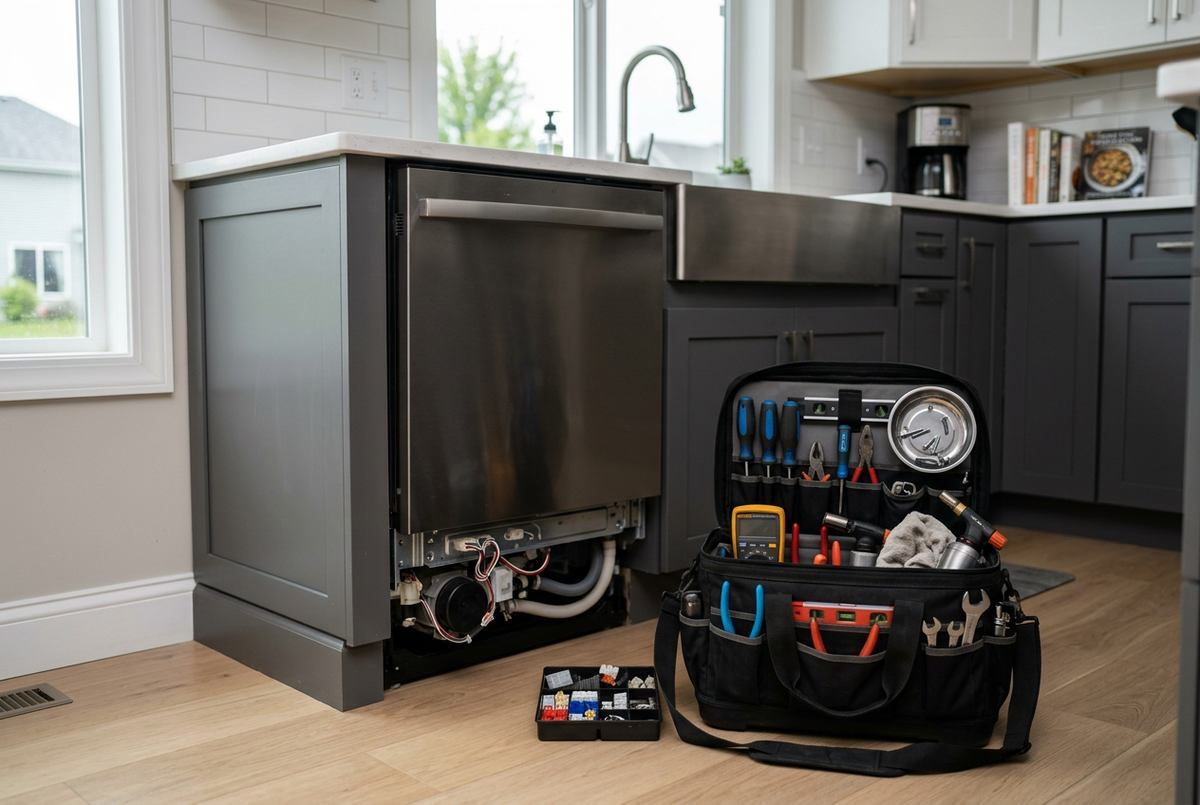
Now we're past what a toothbrush fixes. If the tub is barely warm at the end of a cycle, the heating element or its control may be failing. If there's only a shallow puddle of water in the bottom, the inlet valve may be restricted by scale, or the float switch is stuck. Worn pump parts cut spray pressure without making any obvious noise. A tired door gasket lets heat escape. Cracked spray arms leak pressure instead of aiming it. These need testing, not guessing. Don't pull panels or poke at wiring. Water and electricity share tight space inside a dishwasher.
What we do differently on a service call
We measure instead of assuming. Incoming water temperature gets checked at the fill, not at the sink. We verify the element actually heats and that the thermostat lets the cycle advance. We test inlet valve flow rate, then watch a live cycle to see spray pattern and pump pressure. We inspect the drain path, because water that never fully leaves gets recirculated dirty. Scale buildup gets a look too, since it's the quiet culprit in a lot of Denver-area kitchens. If a part is worn, we say so plainly. If it's loading habits or detergent, we say that. Call us and describe what the dishes look like coming out.
Dishes Coming Out Dirty — what people ask
Should I rinse dishes before loading?
Scrape off solids, but don't pre-rinse them spotless. Modern detergents need some food soil to work against. Do pull out bones, seeds, labels, and pasta bits, because those are what clog the filter and the spray holes.
Why are my glasses cloudy but plates clean?
That's usually hard water minerals or etching, not dirt. Fill the rinse aid dispenser and try a detergent made for hard water. If the film wipes off with vinegar, you're looking at mineral scale.
Can I use vinegar to clean my dishwasher?
A cup of white vinegar in an empty hot cycle helps cut light scale. Don't do it weekly, since acid is hard on rubber seals over time. A dishwasher-specific descaler is gentler.
How it works
- Step 1
Tell us the symptom
Call or fill out the form and describe the noise, the smell, or the error code. Tell us your altitude and whether the unit vents outside. Those small details decide which parts ride along on the van.
- Step 2
We diagnose on site
A technician looks at the appliance right there in your kitchen or laundry room. We test airflow, heat, drainage, and the electrical side. Then we explain the fault in plain words and lay out your repair options before a wrench comes out.
- Step 3
Repair and airflow check
Once you approve it, we do the work. Before we pack up, we run the appliance and confirm it vents, drains, and cycles the way it should. We clean up the area, then tell you what to keep an eye on next season.
- A real person answers
- Open 7 days
- Written quote before work starts
Why homeowners call us
- Rooted in kitchen ventilationHoods, ducts, and blower motors are where this shop started, and the habit stuck. We look at how air moves through your dryer vent, your fridge coils, your dishwasher drain. Blocked airflow causes more breakdowns than bad parts do.
- Built for thin, dry airColorado altitude changes how burners fire and how moisture leaves a room. Dry air also cracks gaskets and dries seals out early. We account for both when we diagnose, instead of treating your home like it sits at sea level.
- Independent and directWe are an independent repair company and we work on all major brands. No script, no upsell theater. If a repair does not make sense for the age of the machine, we say so out loud and let you decide.
- Clear talk, clean workYou get the fault explained in words you can repeat to your spouse. Drop cloths go down, we respect your floors, and dust from vent work gets vacuumed up before we leave the kitchen.
- All major brands, gas & electricIndependent service on Whirlpool, LG, Samsung, GE, Maytag, Bosch, KitchenAid and the rest.
- Straight answersNot worth fixing? We say that out loud, and often it saves you the visit fee.
About this guide
Past the safe checks, it's a job for tools and a meter
Mention which checks you ran when you book; it speeds up the visit.
- A real person answers
- Open 7 days
- Written quotes
- All major brands
- Gas & electric
Rather not call? Get a free quote →