Top-rated independent appliance repair across Colorado
When a Washer Won't Drain or Spin
A washer that leaves the tub full of gray water almost always has a drain problem, and that's what stops the spin. Sometimes the drum never spun at all. Sometimes it tried, groaned, and quit. We see this weekly in Denver homes, and the cause is usually something simple sitting between the tub and the drain.
Call (888) 352-5066- Real people on the phone
- 7 days a week
- Quote in writing before any work
Taking calls until 5:00 PM MT
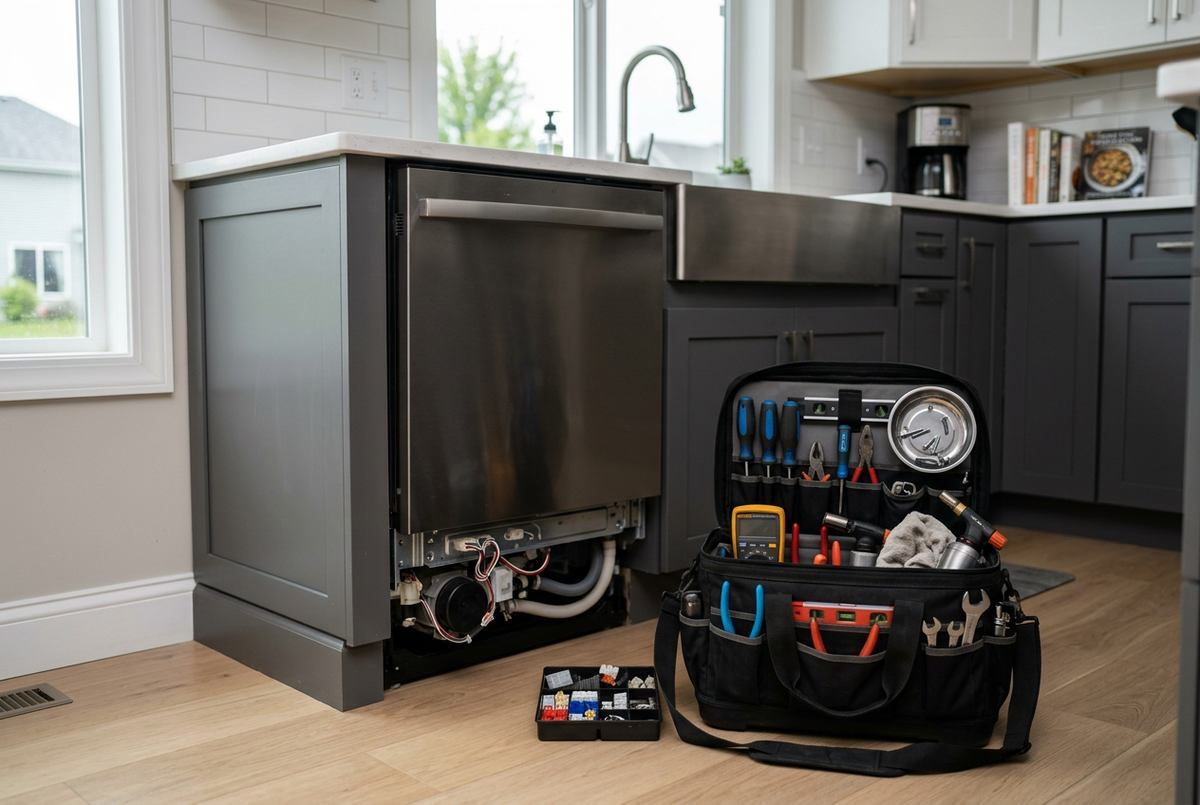
From the technicians at V-Hood Denver
What a full tub is actually telling you
Draining and spinning are linked. Most washers refuse to spin until the water is gone, because spinning a full tub would sling water everywhere. So a no-spin complaint is often really a no-drain complaint. Listen during the drain part of the cycle. A pump that hums but moves nothing points at a blockage. Total silence points at power not reaching the pump, or the lid switch telling the machine the door is still open. Clothes that are wet but not dripping mean it drained fine and the spin itself is the problem. That difference tells us where to start.
Cause one: something stuck in the drain path
This is the most common and the cheapest. Socks, coins, hair ties, and bra wires slip past the tub and lodge in the drain hose or the pump inlet. Lint packs in behind them, and water sits. Front-load machines often have a small filter or coozy near the bottom front, and it clogs with sludge, especially in our dry climate where people run heavy detergent loads. The drain hose can also kink behind the machine after somebody pushes it back against the wall. Shove it too far into the standpipe and you create a siphon, which confuses the drain cycle.
Cause two: the lid switch, door lock, or an unbalanced load
Top-loaders will not spin unless the lid switch confirms the lid is down. That little plunger wears out or gets gummy. Front-loaders use a door lock assembly, and a failed lock reads as an open door forever. Loads matter too. One heavy comforter on one side makes the machine sense imbalance, slow down, and give up rather than walk across the floor. An unlevel machine on an old basement slab does the same thing. Rebalance the load by hand, spread it around the drum, and try a spin-only cycle before you assume a part failed.
Safe checks you can do right now
Unplug the washer first. Then pull the drain hose out of the standpipe and look for a clog or a sharp kink, and make sure the hose isn't pushed down more than a few inches. Redistribute the wet clothes evenly and run a drain-and-spin cycle. On a front-loader, open the small access door near the floor and drain the filter into a shallow pan with towels down. Press the lid down firmly on a top-loader and listen for a click. Stop there. Do not remove the back or side panels, and do not reach toward the motor or control board.
What we do differently on a service call
We meter the pump to see whether it is getting voltage and whether the winding is open. That tells us in a minute whether the pump is dead or just blocked. We test the lid switch and door lock circuits, check the drive belt and coupler, and look at the transmission or shifter on top-load models. Bearings get inspected for the grind that means the tub is dragging. We also check the drain line for standing water and slow-drain issues in the house plumbing, which people often blame on the washer. Call us and tell us what you hear during the drain cycle.
When it is time to book
When a Washer Won't Drain or Spin — what people ask
Can I just bail out the water and run it again?
You can, and it helps us diagnose. But if it fills and fails to drain again, the blockage or pump is still there. Bailing only buys you one load. Unplug the machine before scooping.
Why do my clothes come out soaking wet but the tub is empty?
That's a spin problem, not a drain problem. Usually a worn belt, a failing lid switch or door lock, or a load so unbalanced the machine refuses full spin speed.
Does hard Colorado water cause this?
Mineral scale and detergent residue do build up in drain hoses and filters over time, which slows flow. It rarely kills a pump on its own, but it makes small clogs turn into full blockages faster.
How it works
- Step 1
Tell us the symptom
Call or fill out the form and describe the noise, the smell, or the error code. Tell us your altitude and whether the unit vents outside. Those small details decide which parts ride along on the van.
- Step 2
We diagnose on site
A technician looks at the appliance right there in your kitchen or laundry room. We test airflow, heat, drainage, and the electrical side. Then we explain the fault in plain words and lay out your repair options before a wrench comes out.
- Step 3
Repair and airflow check
Once you approve it, we do the work. Before we pack up, we run the appliance and confirm it vents, drains, and cycles the way it should. We clean up the area, then tell you what to keep an eye on next season.
- A real person answers
- Open 7 days
- Written quote before work starts
Why homeowners call us
- Rooted in kitchen ventilationHoods, ducts, and blower motors are where this shop started, and the habit stuck. We look at how air moves through your dryer vent, your fridge coils, your dishwasher drain. Blocked airflow causes more breakdowns than bad parts do.
- Built for thin, dry airColorado altitude changes how burners fire and how moisture leaves a room. Dry air also cracks gaskets and dries seals out early. We account for both when we diagnose, instead of treating your home like it sits at sea level.
- Independent and directWe are an independent repair company and we work on all major brands. No script, no upsell theater. If a repair does not make sense for the age of the machine, we say so out loud and let you decide.
- Clear talk, clean workYou get the fault explained in words you can repeat to your spouse. Drop cloths go down, we respect your floors, and dust from vent work gets vacuumed up before we leave the kitchen.
- All major brands, gas & electricIndependent service on Whirlpool, LG, Samsung, GE, Maytag, Bosch, KitchenAid and the rest.
- Straight answersNot worth fixing? We say that out loud, and often it saves you the visit fee.
About this guide
When the easy checks change nothing, it's time for a tech
Report what you saw during the checks and we handle the rest. A minute to book.
- A real person answers
- Open 7 days
- Written quotes
- All major brands
- Gas & electric
Rather not call? Get a free quote →